
01 · Context
A different way begins with a different question.
Instead of asking only what a crop lacks, Natural Farming also asks what is happening in the soil, which local resources are being overlooked, and what intervention is sufficient.
Legacy material contrasts ploughing, complete weeding and purchased inputs with reduced disturbance, living ground cover and farm-made inputs. These are directions for observation—not a universal prescription.
02 · Comparison
Conventional, organic and Natural Farming.
| Lens | Conventional | Organic | Natural Farming Vietnam |
|---|---|---|---|
| Inputs | Commercial fertilizers and crop-protection products may be used. | Inputs follow the organic standard in use. | Prioritizes local materials and farm-made preparations. |
| Soil management | Tillage and direct control are common tools. | Practices vary by standard and farm context. | Seeks less disturbance and more biological activity. |
| Decision making | Often follows input and yield schedules. | Combines agronomy with certification requirements. | Emphasizes observation and ecological relationships. |
03 · Foundation
Soil is a place of exchange.
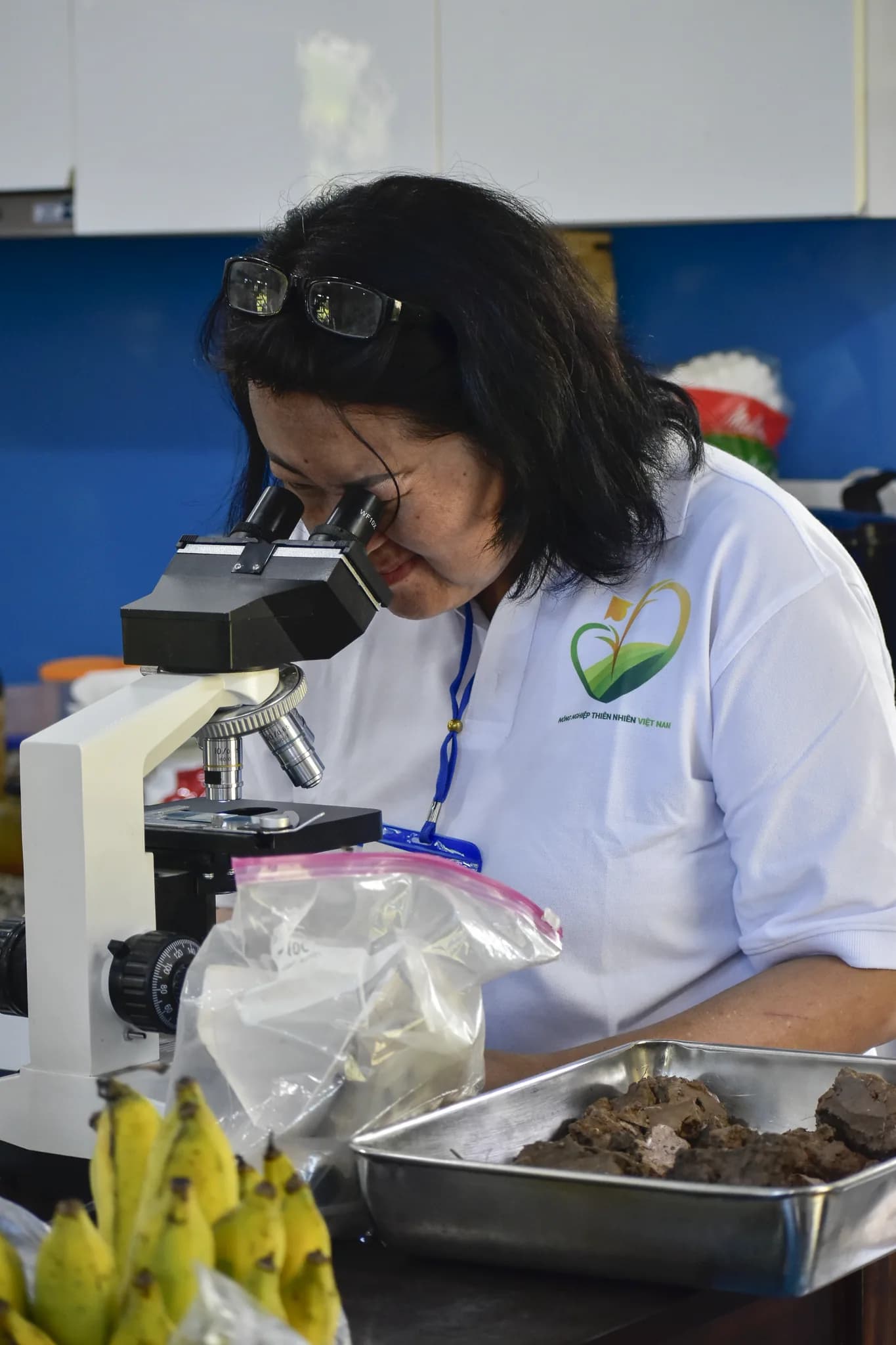
Roots, minerals, water, air, organic matter and organisms form the soil environment. Covering the surface, returning appropriate organic matter and limiting unnecessary disturbance can support this system.
Indigenous Microorganisms (IMO) are central in the legacy knowledge. Collection and culture require hygiene, judgment and on-site learning; they should not be treated as one identical product for every place.
04 · Growth
Read the plant’s changing needs.
Legacy material organizes plant development into vegetative growth, transition, flowering and fruiting. Its potato diagram is retained below as a historical teaching aid; crop stage, soil and local conditions must guide actual decisions.

05 · Knowledge index
Eight names commonly encountered.
This is a concept map, not a recipe set. Preparation, dilution, crop stage, hygiene and local regulation all matter.
IMOIndigenous Microorganisms+
Locally adapted microorganism communities collected and cultured for use with soil and organic matter.
LABLactic Acid Bacteria+
Lactic-acid-producing bacteria discussed in organic material processing and livestock bedding systems.
OHNOriental Herbal Nutrient+
An herbal extract used as one component in some Natural Farming plant and animal practices.
FPJFermented Plant Juice+
A fermented input made from actively growing plant tissue and a sugar source.
FFJFermented Fruit Juice+
A fruit-based ferment associated in legacy material with flowering and fruiting stages.
FAAFish Amino Acid+
A fermented input that makes use of fish by-products as a liquid nutrient source.
WCAWater-soluble Calcium+
A calcium-containing input selectively used according to plant development and observed need.
WCAPWater-soluble Calcium Phosphate+
A calcium-and-phosphate preparation associated with transitional growth stages.
06 · Next step
Begin small, record, compare.
Record moisture, ground cover, structure, volunteer plants, insects and crop response. Change one observable factor, retain a comparison where practical, and evaluate through time.
Learn preparation and use from experienced practitioners, and protect people, crops, water and soil.